
Eu conheci uma garota chamada
04.20.26
Categoria: Vozes de sobreviventes
Modelo: Blog
04.20.26
Categoria: Vozes de sobreviventes
Modelo: Blog
Meu trabalho é defender vítimas de crimes de gênero. Entrei nessa área por um acaso, digamos, fortuito. Vi um anúncio de emprego em um jornal para uma vaga de assistente social para vítimas e testemunhas (por algum motivo, a descrição da vaga não me fez pensar que se tratava de uma defensora de vítimas), me candidatei e consegui o emprego. O resto é história; trabalho como defensora há sete anos.
No entanto, há quinze anos, quando eu tinha dezoito/dezenove anos, fui vítima de violência doméstica. Sofri agressões físicas graves, fui esfaqueada (ainda tenho a cicatriz), abuso emocional, controle coercitivo, abuso financeiro e agressão sexual. Todos os aspectos da minha vida eram controlados por ele. Não havia opção de dizer não ao sexo. Eu dizia não e depois percebia que era inútil, porque ele não pararia de qualquer maneira. Na época, eu não considerava isso agressão sexual porque não se encaixava na narrativa de estupro ou de um parceiro romântico ser um estuprador.
Depus em dois julgamentos com júri e, felizmente, ambos terminaram em veredictos de culpado. Durante esse período, precisei sair de casa com um bebê para morar em um abrigo confidencial para vítimas de violência doméstica em outra cidade, bem longe de casa e da minha rede de apoio. Me senti com sorte por ter uma defensora e trabalhei com detetives e promotores que me apoiaram e me ajudaram a obter o que considerei justiça.
Tenho duas lembranças distintas daquela época que mudaram minha vida. Depois de prestar depoimento, um policial me puxou para o lado e disse: "Ele vai te matar, por favor, vá embora". Essa breve interação dissipou a névoa e a dissociação e me despertou para o perigo que eu corria. O policial não deveria ter feito isso, mas fez mesmo assim. Não sei se eles se lembram de mim ou se algum dia saberão o impacto que aquela interação teve.
A segunda lembrança é do último julgamento. Após o veredicto de culpado, o promotor me acompanhou até a saída do tribunal para garantir que eu chegasse em segurança à estação de trem. Ele estava tão feliz e comemorando o veredicto. Olhei para ele, confusa. Por que isso é motivo de comemoração?, pensei. Mais uma vez, fui despertada do torpor em que me encontrava, arrancada da visão de túnel e do modo de sobrevivência. Eu não havia pensado em ficar feliz ou comemorar; eu apenas estava sobrevivendo ao julgamento e ao ataque do interrogatório que tive que suportar. Estava muito focada em provar que estava dizendo a verdade e em ser uma “boa vítima”.
Meu agressor foi preso duas vezes e cumpriu cerca de dois anos de pena. Fiquei profundamente comovida com o fato de o promotor e o policial estarem lutando por mim quando eu não tinha forças. Essas experiências tornaram a minha atuação como defensora de vítimas algo especial para mim, como se o universo quisesse que isso acontecesse.
Saí daquele relacionamento e nunca mais voltei. Nada daquilo me definiria. Concluí a graduação e o mestrado, mudei de cidade, viajei, e o tempo seguiu seu curso implacável. Passei anos reconstruindo e tapando os buracos. Achava que tinha construído uma casa de tijolos, mas era uma casa de palha, inconscientemente precária e que podia ser derrubada por um lobo a qualquer momento. O que recuperação, seguir em frente, sobreviver costumava significar para mim era não falar sobre o assunto. Prometi nunca mais pronunciar o nome do meu agressor. Não serei definida pelo abuso ou pela violência doméstica; não serei rotulada como vítima, pensei. A cereja do bolo foi me tornar uma defensora, porque isso significava que eu havia completado o ciclo e agora estava do outro lado.
Não contei aos meus colegas de trabalho que havia sido vítima de violência doméstica. Eu queria ser boa no meu trabalho por causa da minha formação, experiência profissional e habilidades, não por ter sido vítima; algo que eu não escolhi ser. Às vezes, me sentia como uma agente infiltrada, como se estivesse usando uma máscara, uma vítima fingindo ser defensora.
Eu acreditava que finalmente estava segura. Mas tudo mudou num instante. O ataque aconteceu no meu trabalho. Eu tinha acabado de sair de uma audiência no tribunal, onde estava dando apoio a uma vítima, e voltava para o meu escritório de cabeça baixa, concentrada no celular. Estava distraída pensando na audiência que tinha acabado de participar e em como a vítima estava feliz com o resultado. Subia as escadas em direção à entrada do prédio quando fui agarrada por trás, apalpada e agredida sexualmente por um estranho, um completo desconhecido. Foi tão agressivo que caí para a frente e escada acima.
Muitos dos estereótipos misóginos que a sociedade tem sobre agressão sexual não se aplicam aqui. Era plena luz do dia, numa rua movimentada da cidade. Eu estava vestida com roupa de trabalho, apropriada para um tribunal criminal; eu estava trabalhando, e aconteceu do outro lado da rua, à vista de uma delegacia de polícia. Essa constatação abalou meu mundo.
“O que você estava vestindo?”
“Por que você estava caminhando sozinha tarde da noite?”
“Você não deveria ter bebido tanto.”
Você deveria ter escolhido melhor.
Você o iludiu?
Todos nós já ouvimos essas perguntas serem feitas às vítimas. Eu fiz tudo "certo", e mesmo assim aconteceu comigo. Eu não poderia ter evitado. Desta vez, meu agressor provavelmente sairá impune porque é um estranho — suspeito desconhecido.
Sou assombrada por um rosto sem nome e perseguida nesta cidade pelo seu fantasma. Caminhamos pelas mesmas ruas, sob o mesmo céu, provavelmente tomamos café feito pelo mesmo barista e ficamos na mesma plataforma esperando o metrô de superfície. Aquele rosto está vívido na minha mente; ele ainda está lá, ao fundo, me seguindo aonde quer que eu vá. Evito aquelas escadas no trabalho e dou a volta por cima. Nada de fones de ouvido enquanto caminho. Estou sempre alerta, com a cabeça girando de um lado para o outro e os olhos vasculhando a área ao redor.
Esse ataque me tirou a segurança que eu havia construído com tanto esforço. Naquele momento, senti como se tivesse sido despida, despedaçada e exposta diante de uma multidão. Eu não estava segura da violência em casa, e também não estava segura no mundo exterior. Eu não era mais uma mulher forte e independente que havia superado a violência doméstica e se tornado uma defensora dos direitos das mulheres. Eu era uma vítima novamente.
Eu nunca me identifiquei com o termo sobrevivente. Sim, eu sobrevivi à violência doméstica e ao abuso sexual, mas quero mais do que sobreviver — quero prosperar. Quero segurança e poder viver em um mundo onde todos possam andar no escuro, tarde da noite, em uma rua deserta com fones de ouvido e chegar em casa em segurança sem sentir medo ou estar em estado de alerta constante. Quero usar biquíni e salto alto, e nada mais, sem me sentir julgada ou objetificada. Também quero um relacionamento onde eu me sinta confiante para dizer não ao sexo ou usar o que eu quiser sem medo de que meu parceiro sinta ciúmes.
Eu me sentia amaldiçoada. Tudo o que fiz na vida foi espalhar amor e bondade pelo mundo. Sou voluntária nos fins de semana e planto espécies nativas de árvores com o departamento de parques e recreação. Meu trabalho é defender vítimas, e sou aquela amiga que te busca no aeroporto ou faz um bolo de aniversário para você. Mas, em troca, recebo violência e abuso.
Eu nunca saberei a vida que poderia ter vivido, as pessoas que poderia ter sido. Trauma, violência e agressão assolaram minha vida. Estou exausta de carregar esse trauma comigo. Minha vida foi destruída. Passei semanas deitada na cama, chorando e deprimida, e se eu me levantava, tinha crises de pânico. As crises de pânico ficaram tão fortes que eu não conseguia respirar, e minha pressão arterial subia tanto que eu ia ao consultório médico, e eles não me deixavam sair.
Eu já conhecia o KCSARC e, desde a primeira ligação, soube que era ali que eu precisava ir para obter ajuda. Comecei a terapia e ela salvou minha vida; não há palavras para expressar o impacto que minha terapeuta teve em mim. Meu trauma era Golias; eu era Davi. Minha terapeuta me deu o estilingue e a pedra para derrotar o gigante que eu enfrentava. Eu sabia que caminhar ajudaria. No começo, eu odiava. Minha mente ficava acelerada e eu só chorava, de óculos escuros e boné abaixado, mas me obrigava a fazer essas "caminhadas idiotas para a saúde mental", como eu as chamava. A combinação de terapia e caminhada me colocou de volta nos trilhos.
Eu mal conseguia funcionar, mas precisava continuar. A vida não foi feita para lidar com esse tipo de trauma, e eu me sentia amargurada por isso. Não tinha ninguém próximo que sequer começasse a entender o que estava acontecendo comigo. Eu não conseguia me identificar com o privilégio de não ter vivenciado violência doméstica e trauma. As pessoas ao meu redor falavam sobre férias, encontros românticos e piadas. Eu gostaria de ter podido pensar e aproveitar essas coisas. O trauma tem um prazo de validade no mundo real — seu trabalho e seus amigos são compreensivos no início, mas espera-se que você volte ao trabalho e siga em frente, que volte a ser a amiga alegre e extrovertida de sempre.
Por sorte, eu tinha uma viagem planejada para Paris, uma mudança de cenário muito necessária. Entrei no salão do Louvre e vi Nike, alta, poderosa e bela, mas sem cabeça, sem braços e com uma asa reconstruída. Nike havia sido reconstruída e refeita; ela é a deusa da vitória. Em sua posição original, ela estava voltada para o nordeste, o que, segundo os arqueólogos, significa que Nike representa a vitória espiritual. Isso me tocou profundamente. Eu estava travando minhas próprias batalhas em uma jornada difícil para alcançar minha própria vitória espiritual. Eu me sentia como se também estivesse sem braços, sem cabeça, despedaçada e espalhada. Com a ajuda da minha terapeuta, juntei meus pedaços um a um e reconstruí a mim mesma e minha vida.
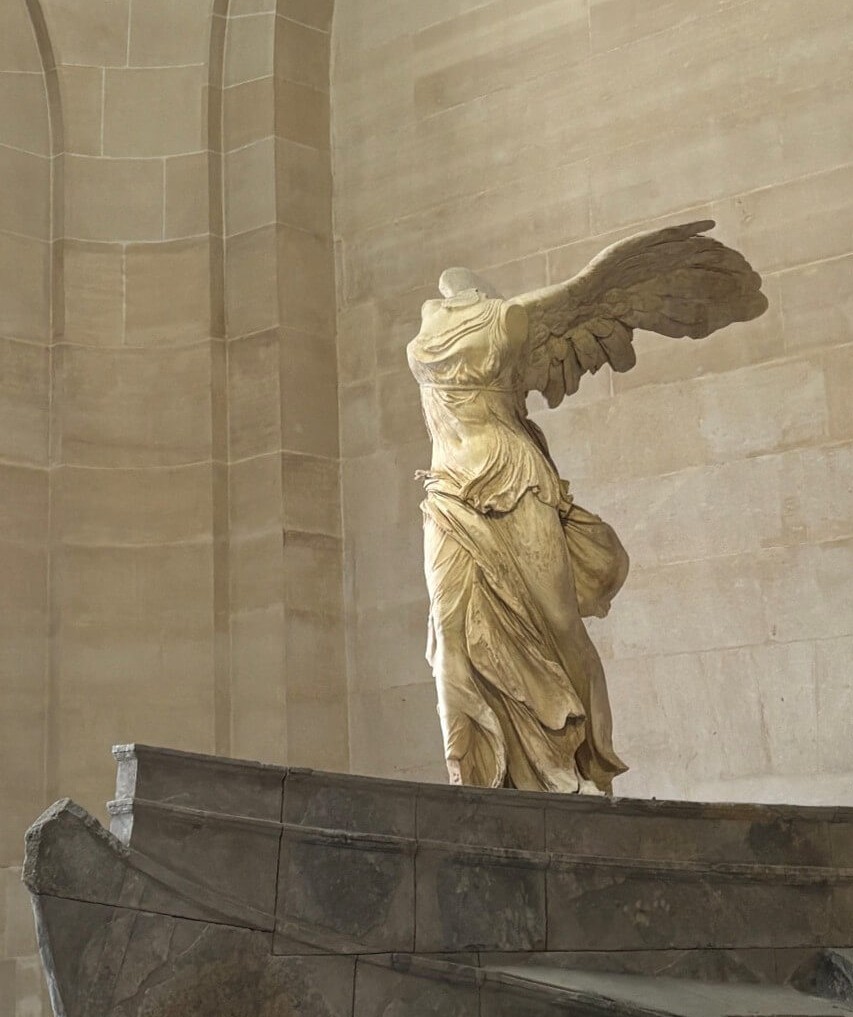
A arte me lembra que existe beleza no mundo. Tanto a arte quanto a música sempre me ajudaram a lembrar disso. A arte é o oposto do trauma. O trauma embota o mundo e suga a alegria. Ele isola você e te desconecta de si mesmo, do seu corpo e do mundo ao seu redor. Por outro lado, a arte é bela e me lembra que existe algo pelo qual vale a pena lutar e que a cura existe. As artes me reconectaram com meu corpo, meus sentidos e minhas emoções.
Esse novo trauma reabriu feridas antigas. Eu estava sangrando por duas feridas, e estava sangrando até a morte. Minha antiga postura de silêncio e de "manter a calma e seguir em frente" não estava funcionando dessa vez. Eu sabia que dessa vez teria que falar sobre meus sentimentos e recontar as agressões que sofri. No começo, não fiquei feliz com isso, mas no fundo eu sabia que era a coisa certa a fazer. Eu não queria sentir vergonha ou, pior, pena dos outros. Já vi o rosto de pessoas que não sabem o que dizer porque não passaram pela mesma situação.
Eu sei que o silêncio só ajuda os abusadores. A primeira vez que ouvi a música Fairchild por DaveFiquei paralisada. Sempre achei a música comovente e uma forma de arte expressiva que pode contar uma história, criar uma cena, soar como um poema ou destacar uma questão para um público amplo. A música descreve como é viver como mulher e os perigos que enfrentamos. Temas sociais mais amplos e abrangentes sobre a violência contra a mulher também são abordados, algo que não é discutido o suficiente na cultura popular. Dave destaca a misoginia e o patriarcado que permeiam a mídia convencional, as normas culturais e as visões, atitudes e preconceitos inconscientes das pessoas. O resultado é que isso criou um clima que fomenta o abuso de mulheres e crianças e protege os agressores. A cultura e os sistemas atuais fazem com que "todos conheçamos uma vítima, mas não um agressor", como diz a música.
Não vou mais carregar a vergonha ou o constrangimento; estou devolvendo isso aos abusadores. Estou devolvendo ao remetente sem endereço de retorno. Pertence a eles, e eu abro mão da posse disso.
Que a pessoa que eu era antes descanse em paz, que todos os traumas e todas as versões de mim que eu poderia ter sido e as vidas que eu poderia ter vivido descansem em paz.
Emilee, que descanse em paz.
A Linha de Recursos 24 horas do KCSARC está disponível 24 horas por dia, 7 dias por semana, com defensores treinados prontos para ouvir e fornecer suporte e informações gratuitas e confidenciais para ajudar você a determinar os próximos passos. Quando estiver pronto, ligue para 1.888.998.6423.
A jornada de cura e recuperação de cada sobrevivente é única e pessoal. Os pensamentos e experiências compartilhados pelos membros do Empowered Voices são pessoais e podem não refletir as experiências ou a jornada de cada sobrevivente. As opiniões expressas não pretendem representar a visão organizacional do KCSARC.